
3月 25, 2026
活动新闻
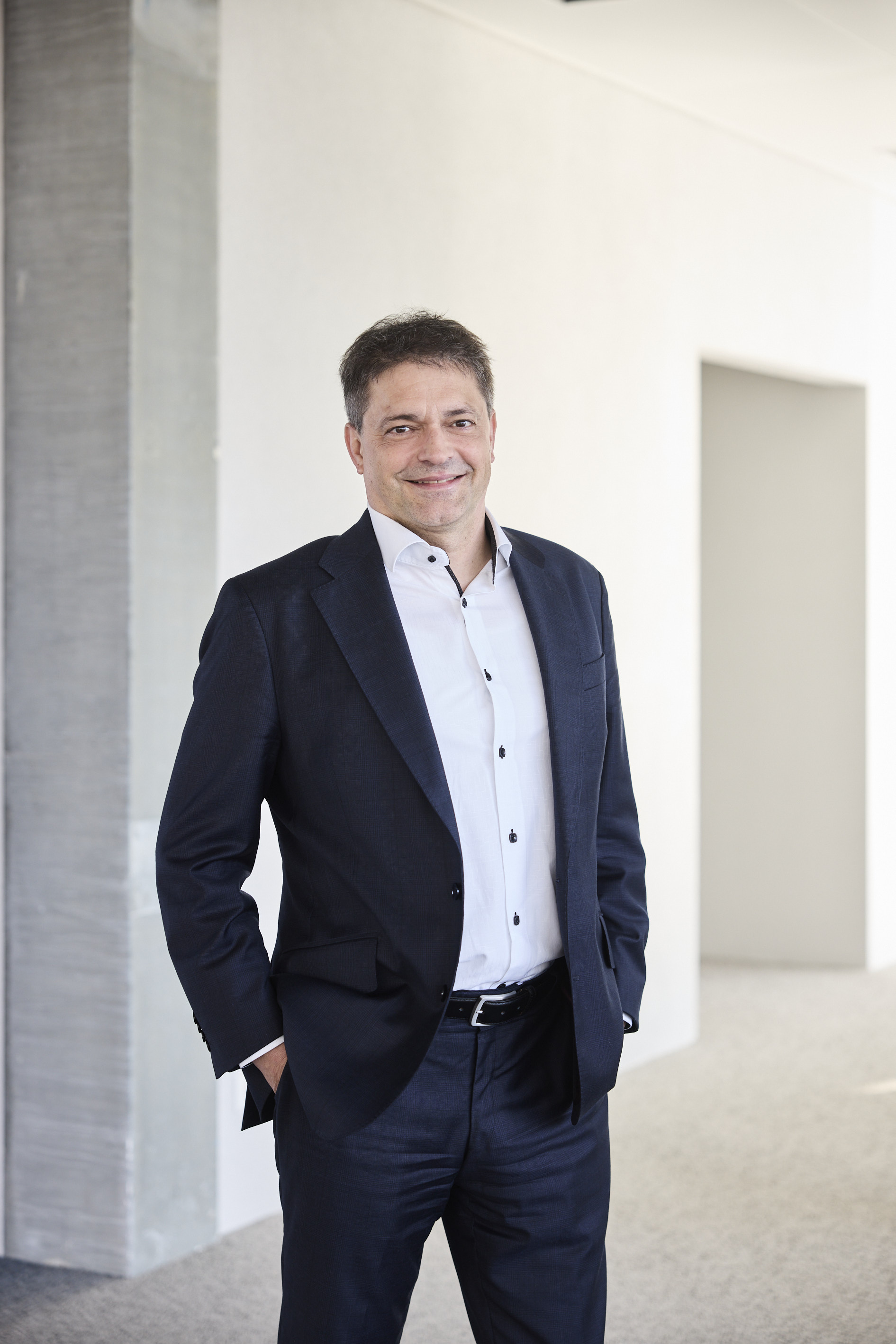
It was a challenging yet satisfying year for VAT. We achieved most of the goals set at the start of the year by taking advantage of the technological transitions into more leading-edge applications, while at the same time dealing with adversities we had not expected in this magnitude at the beginning of 2025. The overall semiconductor market continued its recovery, with WFE growing by about 10% in 2025. Unfortunately, not all this growth was in areas where VAT and its vacuum offerings could participate, which meant that our quarter-byquarter order intake lagged expectations for most of the year. This was further accentuated by very strong foreign exchange headwinds, not only in the USD/CHF rates, but basically against all our trading currencies. The last quarter, however, showed that VAT is still ideally positioned to leverage its market and technology leadership. So, overall, one of my highlights of 2025 was to see that VAT was able to execute its orders at hand, achieving a record factory output while safeguarding its profitability and strong cash generation.
Let me start with the reported order intake. At CHF 1,033 million, it was flat compared with the previous year. Taking a constant currency view, however, order intake would have been 6% higher than in 2024. Our sales grew substantially by 14% to CHF 1,073 million. Here again, we faced quite a headwind from currencies; on a constant currency basis our growth would have been 20% year on year. To give you an even better picture of how much negative topline impact we saw, we calculated our 2025 sales at the currency levels we had in 2022, the year we broke the CHF 1 billion mark for the first time in VAT’s history, at CHF 1,145 million. Using those rates, our 2025 sales would have been CHF 1,260 million and substantially above our previous record.
EBITDA was certainly also one of the key achievements in 2025. With a 30% EBITDA margin, we managed to stay within the guide range of between 30% and 37% – admittedly at the very low end, but again, FX posed a significant headwind, together with accounting impacts from the deployment of inventory.
One very important metric we need to highlight is our cash flow generation. At CHF 230 million, free cash flow increased by close to 26%, a strong signal that VAT’s cash generation capabilities remain very strong and are expected to be one of the key success metrics in the coming years. Consequently, the board of directors has decided to propose a larger dividend of CHF 7.00 per VAT share to its shareholders, representing a 12% increase over the 2024 level.
Absolutely. We continued to invest substantially in our innovation efforts. We spent CHF 75 million or 7% of sales on R&D. In absolute numbers this represents a new record in VAT’s history. We also again achieved a record number of specification wins, with 150 in 2025, testament to the fact that VAT can push the boundaries in vacuum technology further and is ready for the sub-2nm area which we will see in a couple of years. We remain an integral part of our customers’ product roadmap and are solidifying our position as a strategic partner – a position that is substantially more than just being a supplier.
We also continued to invest in our employees and strengthened our leadership teams globally. Being present around the globe makes it mandatory to have strong local leadership teams, allowing VAT to broaden its skills and cultural mindset, and whenever I travel to our non-Swiss locations, it’s extremely rewarding to see the enthusiasm and passion all our colleagues have for VAT.
You remember that last year I said that since I had taken over as CEO, many people had asked me whether I wanted to change the strategic direction of VAT. At that time, I said that the board of directors and executive management had no intention of fundamentally deviating from the overall strategic direction first communicated at the time of the IPO in 2016 and largely confirmed at our two capital market days in 2020 and 2022. However, strategy remains a fluid matter and can never be carved in stone. It needs constant adjustments based on the business, markets, and geopolitical environment.
Major cornerstones of our 2025 to 2029 strategy remain our very strong market and technology leadership in vacuum valves, coupled with expanding our presence in the so-called adjacencies: products that are not vacuum valves per se but are very closely linked to our core valve offering. With this strategy, we aim to continue our ambitious growth plan of outgrowing our markets by as much as twofold.
We derive our confidence in this growth ambition from the fact that leading technologies in semiconductors will account for a larger portion of WFE and post faster growth than the more mature technologies. Since we are very successful in terms of spec wins, as explained before, our Semiconductor business will benefit disproportionately from this trend. Also, the percentage of vacuum-related processes is expected to increase further, again reflected in faster growth in vacuum investments as a percentage of WFE. In addition, we have a fantastic Global Service business that will continue to benefit from its fast-growing installed base and our strategic initiatives to form even closer ties not only with OEM customers, but also directly with the leading chip producers. And then we shouldn’t forget our Advanced Industrials business unit. There we expect to participate in several major trends in scientific instruments and power generation.
So, in a nutshell, our strategy out to 2029 continues to center on technology, production capacity, and people – all this with one north star: our customers. They are at the heart of all our efforts, and building on the strong relationship we started back in 1965, we continue to put customer centricity above everything we do.
Technology and customer intimacy will remain at the core of everything we do. With this in mind, we are in close collaboration with our customers to figure out what their challenges will be when node sizes are no longer measured in nanometers but in angstroms, and how VAT can continue to support them and help them overcome these challenges. This will continue to be done with our core products, valves, and increasingly with our current adjacencies: advanced modules, motion components, and gas inlet vales. Our combined offering will allow us to grow the share of wallet (SOW) – the percentage of VAT components in the overall production cost of a semiconductor manufacturing tool – from currently less than 2% to up to 4% on average.
But we are aware that this may not be enough, and so we are working on a variety of products and solutions to support our customers even better in their technology quest. Developing new products and bringing them to the market often takes years, and market adoption of new innovation needs inflection points, such as the one we’re just experiencing in the transition to GAA technology with a higher share of process steps which need atomic precision, paving the way for our proprietary ALD gas inlet valves.
With our Innovation Center, inaugurated in late April 2025, we have a real game-changer at our disposal, ensuring that we will have the technology and offerings available to back our ambitious growth targets for 2029 and beyond.
Over the last 60 years or so since VAT was established, the company has grown from zero to over CHF 1 billion in sales purely organically by developing its products, markets, and customer base without any acquisitions. During this time, the focus has always been on the evolution of vacuum valves based on material and manufacturing expertise. This deep knowledge will remain at the core of future vacuum valve developments, meaning that we still have a way to go in terms of particle count, speed, and precision. This fundamental understanding of valves has also helped us develop our first adjacencies, such as the advanced modules, the motion components, and our gas inlet valves. Going forward, however, we will also need to look at other development disciplines where VAT may not yet have the same experience. Here you always have to ask whether we can do it in-house in a reasonable amount of time, and if so, what other experts would we need to attract to VAT to do so. If we are confident that we can manage all this, then certainly organic growth is the preferred way. However, as we move further away from our core competencies with products that are complementary to our core offering, we may well realize that VAT needs certain additional capabilities rather quickly. In such a case, inorganic steps may prove to be in order. At this stage, and as mentioned in the past, we would rather look at smaller technology bolt-ons, much like the small sensor business we acquired some years ago as a spin-off from a university. This acquisition was very small but gave us very valuable insights into the sensor business. Without it, we would not be as far advanced in the development of a marketable product as we are today. It’s still some time away from proper market introduction and sales generation, but is nevertheless an important step in understanding how to proceed with our complementaries strategy.
VAT is the market and technology leader in vacuum valves, and our products are mission-critical to producing the latest semiconductor technologies. So, we are certainly not lagging behind in terms of technological progress. Having said that, it must be obvious that VAT is also participating hugely in the development of AI. AI semiconductors use, and indeed depend on, the latest production technologies. Gate-all-around (GAA) logic chips and high bandwidth memory (HBM) DRAM chips require the latest manufacturing technologies, precisely the ones we talked about before. Leadingedge production is enabled through our latest valve generations, and thanks to our superior spec win rate, we make sure that most future manufacturing tools for these chips will be equipped with VAT valves and adjacencies. Without our products, AI would not grow as projected today. However – and this needs to be kept in mind as well – the growth in AI-related investments in data centers, etc., is to a large degree also driven by sharply increasing average sales prices (ASPs). The unit number of required chips is also growing nicely, but at a slower pace than the ASP.
Yes, the trend to this number is fully intact and has now even accelerated. Higher ASPs, together with faster bit growth, have led several market researchers to the conclusion that the USD 1 trillion mark could already be reached in 2027 or 2028 at the latest. This has also led to higher projections for wafer fab equipment (WFE): while in May last year when we had our capital markets day this was projected at around USD 125 billion for 2027 and USD 150 billion for 2029, now these figures are estimated at around USD 135 billion in 2027 and as high as USD 180 billion in 2029.
Indeed, this is what the board of directors, together with the management team, has laid out in its strategy, which we are now fully engaged in executing. VAT has been and will remain a growth company by playing a key role in the future development of the semiconductor industry. Yes, this industry remains cyclical, albeit less than in the past, but VAT is focusing fully on capturing all the growth opportunities that arise. We are not immune to WFE investment cycles, but we have a strong operating model that will enable us to weather possible future downturns and still generate very healthy EBITDA margins and a superior cash flow profile. However, all market predictions are now foreseeing a steady increase in WFE spend in the coming years, and contrary to previous sharp investment downcycles, they are now expected to rather plateau before growing again, as the industry is structurally changing to a constant need for investment in the manufacturing infrastructure for new devices and applications.
There were certainly many highlights during the year, and while it would be too much to elaborate on all of them, I’d still like to pick some out.
In 2025 we celebrated VAT’s 60th birthday. I also talked about this in last year’s interview. Today I can report that all the festivities we hosted at all our sites were mind-blowing. It started with the 2025 annual general meeting (AGM), held not in the usual location at Messe St. Gallen, but instead at the Swiss National Circus Knie, which by coincidence had put up its tent only a few steps away from our normal venue. So, the participating shareholders not only had the unique opportunity of seeing our board of directors in a different environment, but also got to enjoy a selection of acts from the current Circus Knie program. After these acts, shareholders were also invited to an after-show apero before everything was set up for the big VAT Switzerland party the same day for our colleagues in Haag. Food, drinks, and the full circus program created a magical night with plenty of smiling faces.
But we also hosted celebrations in Penang, Malaysia, and Arad, Romania, inaugurating new production facilities at both locations.
Another highlight was certainly the moment the very first apprentice who joined VAT in 1975, Fritz Heeb, retired after 50 years at the company last year. This was a very emotional moment for me as well, as it showed not only that VAT is a great partner to our customers, but also a reliable partner to our employees. We manage to create and uphold a culture of mutual trust, and while we may never again see a colleague celebrating 50 years at VAT, as the times are changing, it is still abundantly clear to me that trust and mutual respect are fundamental to achieving the best possible performance. We want to attract the best talents to VAT, and once we have found them, we need to create an environment where they can flourish and reach their full potential. This is only possible when managers and leaders listen carefully and are open to fresh ideas without neglecting tradition.
It is in this tradition that in 2025 we continued with the program revolving around our passions – Integrity, Teamwork, Customer Centricity, and Innovation – the tried and proven cornerstones of our success. VAT’s leadership and success is less about rules, policies, and hierarchies, and more about trust, behaviors, role modeling, teamwork, and an unwavering entrepreneurial and winning spirit.
VAT’s commitment to sustainability in all its facets is unwavering. We continued our journey to become a leader in sustainability matters and achieved several successes. The details of these successes can be read in our sustainability report, which we have also published on the same day as this annual report and made available for download on our website. In short, we improved our ranking in several sustainabilityrelated ratings. We received certification from LEED and BREEAM for the Innovation Center and our new factory in Romania. With 28% of all new hires in 2025 women, we are ahead of our 2027 target of 25%. We reduced our GHG emissions and also entered into an agreement with the Science Based Target initiative (SBTi) on a defined reduction plan for our GHG emissions.
The vision for VAT is clear, and we spent quite some time going into the individual parts of this strategy at the beginning of our discussion.
To summarize: we will continue to execute our strategy with a focus on the expected growth of the semiconductor market. This includes both the Semiconductor business units and the Global Service segment. In addition, we continue to execute on our priority areas in Advanced Industrials, mainly scientific instruments and power generation.
All this is done with a strong focus on ongoing innovation and our customers at the center of everything we do. If our products and services allow them to be successful, then we will be as well.