Sep 17, 2026
Events
For VAT, sustainability means creating long‑term value for the company, the environment, and the people we impact. Our approach “creating value sustainably”, is built on three pillars: People (social), Planet (environmental), and Performance (economic). All sustainability initiatives at VAT contribute to one or more of these three dimensions.
Internally, we create a diverse and inclusive workplace where people can grow and develop, Externally, we hold suppliers to the same ethical standards to protect worker’s rights. We also invest in initiatives that positively impact the communities we work in and the society.
Our focus is to reduce VAT’s environmental impact and address climate risks. We aim to lower CO2 emissions at our sites and throughout our value chain while using resources like water, energy, and land more efficiently. We also recognize that climate change and resource use affect biodiversity, and we are committed to minimizing these impacts.
At VAT, we believe that caring for people and the environment strengthens both our efficiency and long-term success. We focus on resource efficiency, circular solutions, and sustainable innovation to create value and grow responsibly. Sustainability is built into our product design from the start, helping us deliver better solutions for our customers and unlock new business opportunities.
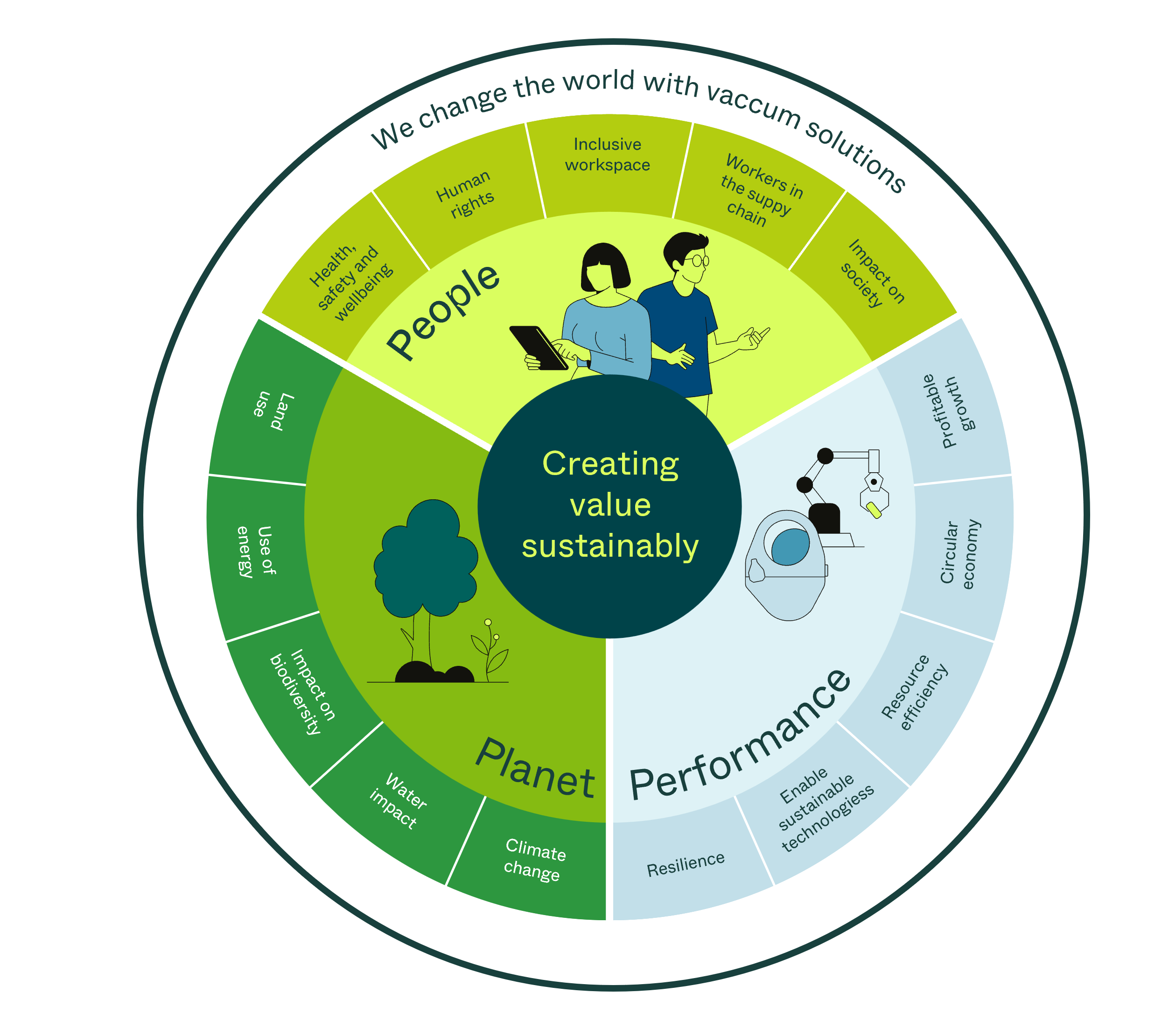
VAT includes sustainability into its business strategy using a framework based on the identified material topics according to the double materiality assessment performed in 2022. Our strategy also allows us to further contribute to the UN’s sustainable development goals (SDGs), to define clear targets per topic and to follow a prioritized roadmap of measures to work towards these goals. In line with our governance structure, the sustainability strategy was endorsed by VAT’s Group Executive Committee as well as the Sustainability Committee of the Board of Directors.
VAT takes care of the health, wellbeing, and safety of its employees. We carry out awareness campaigns on health issues such as breast cancer or mental health. Through VATcares, we also provide essential humanitarian aid on a global scale.
VAT prioritizes initiatives that support STEM education, providing local education programs beyond our own training schemes, internships, and apprenticeships. VAT sponsors students to explore science and technology-related career paths.
We are committed to an inclusive workplace where all have equal opportunities for advancement. We strive to increase gender diversity for example by inspiring young talents and setting hiring targets.
We strive to minimize our water footprint, source freshwater, and discharge wastewater without negatively impacting ecosystems, both for VAT's operations and its suppliers, for example by using advanced wastewater treatment systems.
As part of our effort to reduce GHG emissions, VAT is increasing its share of energy consumed from renewable sources at all our production and service sites, as well as promoting the use of more energy efficient technologies, such as solar panels.
By integrating human rights considerations into our policies and business processes, we aim to protect our employees’ rights and well-being, and create an environment where people and businesses can thrive.
VAT innovates to become a key player in the development of sustainable technologies, through products empowering emission-reducing technologies, such as solar photovoltaic, solar thermal technologies and nuclear power.
We are promoting an efficient use of aluminum, water and other resources. By prioritizing waste reduction, recycling, and proper disposal methods, we aim to minimize our ecological footprint, conserve resources, and promote a circular economy.
By decreasing our GHG emissions, VAT aims to mitigate its impact on climate change, contribute to global efforts to reduce carbon emissions, and safeguard the environment for future generations.
Health, Safety, & Wellbeing
Human rights
Inclusive workplace
Workers in the supply chain
Impact on society
Climate change
Water impact
Use of energy
Profitable growth
Circular economy
Resource efficiency
Enable sustainable technologies
Resilience
More details can be found in our Sustainability report